
Hays County Traffic Warrants Explained
A traffic matter begins with the citation and its response deadline. If a person misses that date or an ordered payment, the issuing JP or municipal court may start additional process under its rules. The exact consequence depends on the court and case; no one countywide fee or timing rule applies to every ticket.
Hays County’s seven Justice Courts handle fine-only and traffic matters. San Marcos, Kyle, and Buda have separate municipal routes. The city named on a citation does not by itself tell you which court issued it.
Seven Hays County JP Warrant Routes
JP 1-1 and 1-2 serve San Marcos; JP 2-1 and 2-2 serve the Kyle area; JP 3 is in Wimberley; JP 4 is in Dripping Springs; and JP 5 is in Buda. Check the precinct directory for current contact details before visiting.
A city citation can stay in municipal court even when a JP sits in the same town. Dripping Springs Municipal Court expressly does not handle traffic. Wimberley emergency-services information routes traffic and fine-only matters to JP 3.
Use the Hays County Justice Court directory to identify the precinct.
Checking for a Traffic Warrant
Use the court name on the ticket as the first filter. A Hays JP matter goes to its precinct clerk; a San Marcos, Kyle, or Buda ticket goes to that city’s Municipal Court. The city may link a case-search or payment vendor, but the live fields should be checked at the official parent page. San Marcos offers direct court inquiry rather than a public warrant-search form in the reviewed source.
- Read the citation for its exact court, court number, case or citation number, and response date.
- Open that JP or city Municipal Court page from Hays County or the city domain and follow its official search link.
- If nothing appears, call or visit the issuing court using its current published contact details. No single county traffic-warrant phone line was documented.
- Ask whether a court process, fee, payment plan, or appearance applies before submitting payment.
Hays County Traffic Warrant Route: Dripping Springs to JP 4
Dripping Springs Municipal Court handles listed building, zoning, health, and other City or ETJ ordinance matters, but it does not handle traffic. The county traffic route is JP 4 at 195 Roger Hanks Parkway, Suite 2, with phone 512-858-7446.
This boundary prevents a common wrong turn: a city address does not make every citation a city-court case. The citation’s issuing court controls. Wimberley traffic and fine-only questions route to JP 3, not the City Secretary’s agenda and minutes archive.
Inside a Traffic Warrant Record
Hays does not provide one traffic-warrant record schema for all seven JPs and city courts. The citation number and court name are the strongest starting points. The table shows useful fields to compare but marks status and fee fields as court-dependent.
| Citation / cause number | Use the number on your notice; no common Hays format was documented. |
|---|---|
| Case category | Traffic, ordinance, fine-only, or another court category. |
| Issuing court | Named JP precinct or Municipal Court. |
| Fine / court cost / warrant fee | Separate amount labels; fees vary by city and court. |
| Status / DPS report | Different systems; confirm each with the court or DPS/OmniBase. |
Hays County Warrant Fields in Traffic Portals
The portal fields are not uniform. Court, citation number, name, appearance date, case type, warrant indicator, amount, and payment option may be shown differently by the JP or city system. The research did not confirm a universal date-of-birth requirement or a single warrant-status field. Do not infer either from a blank box.
Buda’s court materials warn that payment options may carry a plea or finding-of-guilt consequence. The city lists a $50 warrant fee per charge and a separate time-payment fee. Those figures are Buda-specific and can change.
The city’s citation response page explains its options.
| Search Field | What It Helps Identify | What to Confirm |
|---|---|---|
| Name or date of birth | Potential person match in a court or city search. | Confirm with the clerk; no single Hays portal requirement was documented. |
| Citation or cause number | The specific ticket and docket. | Use the number printed on the notice and verify the issuing court. |
| Court or precinct | Which JP or municipal record system to search. | Traffic may route to a different venue than a city ordinance case. |
| Case type and event date | The offense category and missed setting. | Compare the court's event history with the original citation. |
| Balance and status | Possible amount due or warrant indicator. | Ask the court whether the warrant and any DPS/OmniBase report are cleared. |
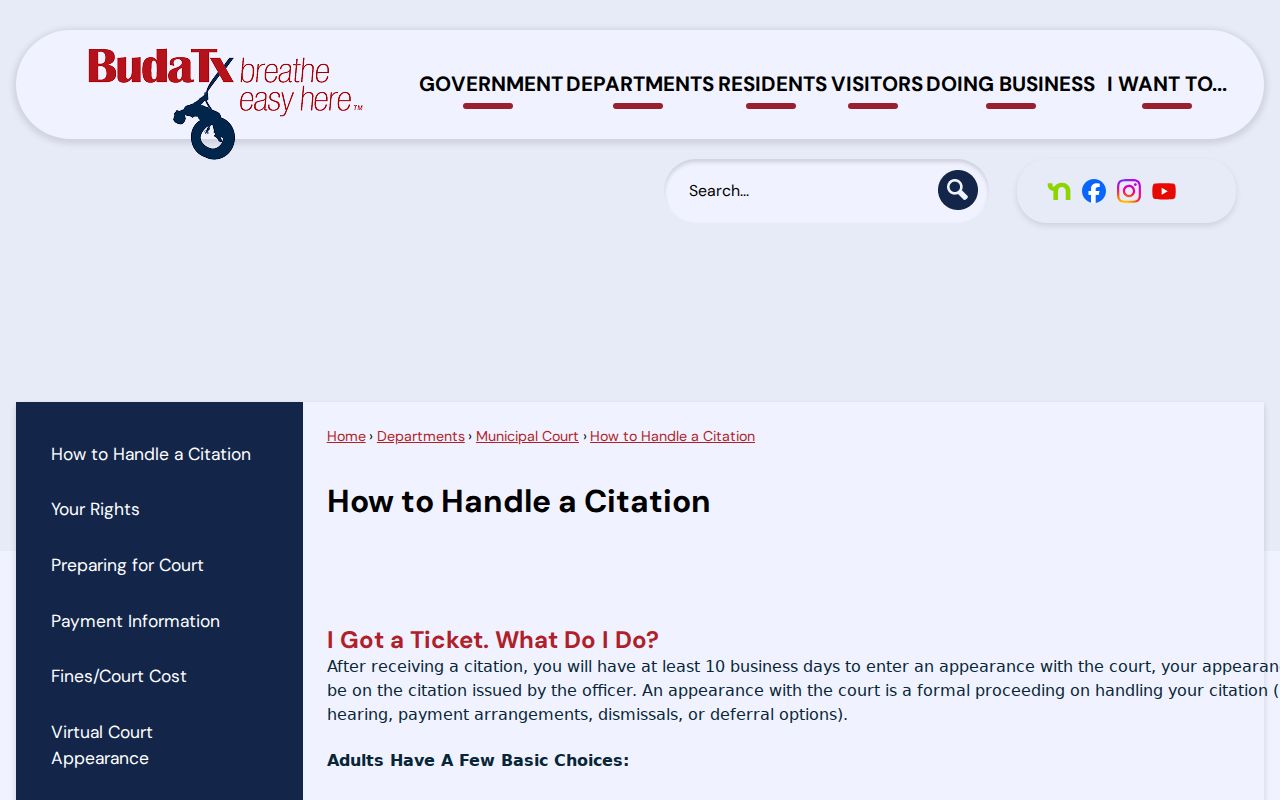
Use the court’s labels to distinguish a citation response from a warrant lookup.
How to Pay or Lift a Traffic Warrant
Ask the issuing court what action resolves the process. Payment, a court appearance, a payment plan, a contest, deferred disposition, or a bond may have different effects. The court decides whether a warrant is recalled and whether another hold remains. Do not assume a portal receipt changes every record at once.
- Confirm the case, amount, and current process with the court named on the ticket.
- Read the payment or appearance terms, including any plea language and separate fee labels.
- Ask about a plan, contest, extension, deferred disposition, or bond if those options fit the case.
- Keep the order or receipt and ask when the court reports any separate DPS/OmniBase status change.
Warning: A payment does not automatically recall every warrant or clear a separate DPS/OmniBase report. Confirm both records with their official sources.
Hays County Warrant Payment Does Not Confirm Clearance
Buda’s Preparing for Court page says missing the citation deadline can add a Violated Promise to Appear charge and an arrest-warrant process. It lists a $50 warrant fee per charge and describes DPS/OmniBase consequences. The city also warns that payment and citation-response choices can have legal effects.
Before paying, identify which charge, court, and fee the portal shows. A time-payment fee, fine, court cost, warrant-processing fee, and bond are not the same amount. Buda’s instructions apply to Buda Municipal Court, not a Hays JP ticket.
See the city’s Preparing for Court page.
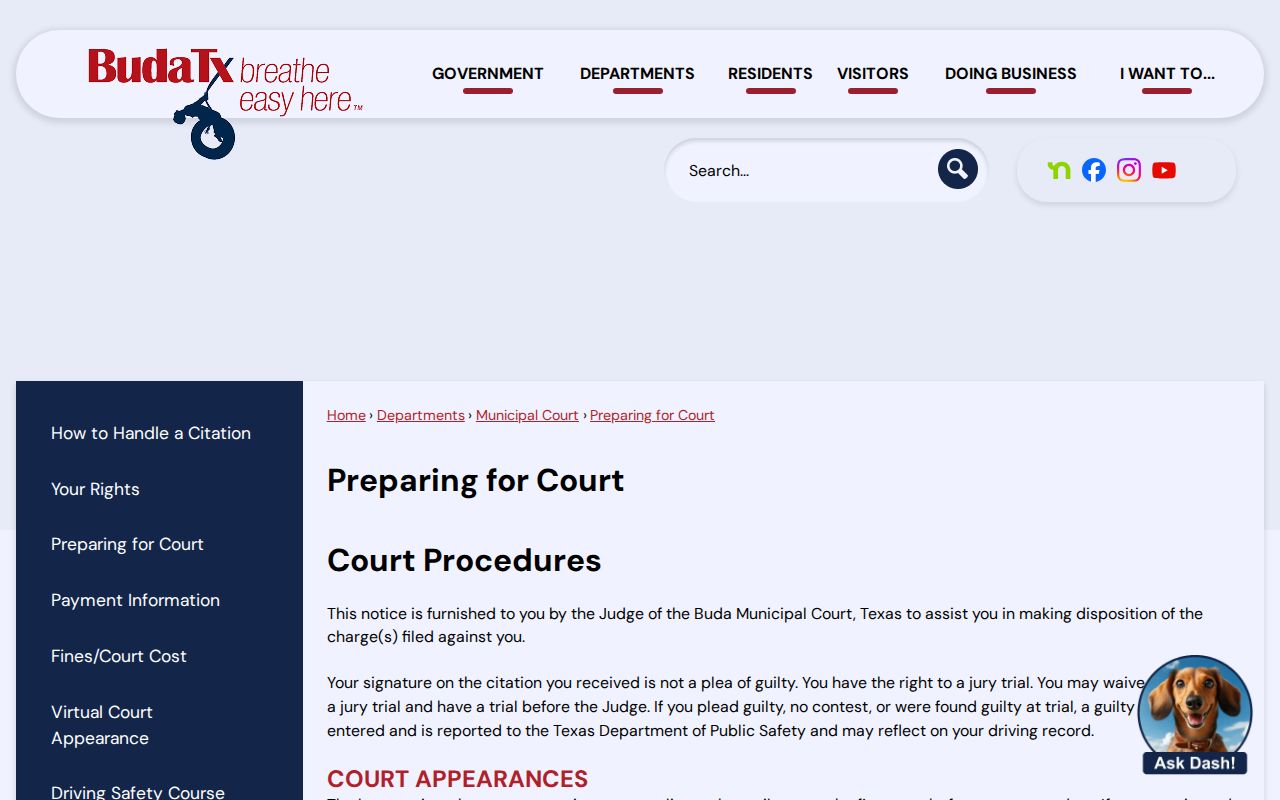
That warning is a local example, not a statewide fee schedule.
Traffic Warrants, FTA, and License Holds
A traffic warrant is court process. A failure-to-appear or failure-to-pay report can also trigger a separate DPS license-renewal issue. DPS tells people to contact the issuing court or OmniBase and says its license specialists cannot provide warrant information. Keep the court question and license report separate.
| Mechanism | What Triggers It | What It Does |
|---|---|---|
| Traffic warrant | Court-specific citation or missed-date process | Use the issuing court for current status and remedy. |
| FTA / FTP report | Court-reported failure to appear or pay | Ask the court or OmniBase about the report. |
| License-renewal consequence | State program after court reporting | Separate from warrant status; updates may take several business days. |
Hays County Traffic Warrant License Holds
Texas DPS describes the FTA/FTP program as a court-reported matter that can affect driver-license renewal. It is not a statewide active-warrant lookup. DPS materials describe a three-to-seven-business-day update window depending on the page and reporting flow, so check the current official notice before relying on a precise estimate.
If an unpaid or missed traffic case is involved, ask the JP or municipal court whether it reported the matter and how it submits a resolution. Then ask DPS or OmniBase about the separate state record.