
Hays County Municipal Court Warrants
Municipal courts handle violations within a city's authority, including many traffic citations, local ordinance charges, and other Class C matters. A judge may issue a warrant after a missed court setting, or the record may identify a capias pro fine after a fine or court order remains unpaid. These are different procedural paths, so a single label does not tell the full history.
The issuing court keeps the case record and decides what can clear its warrant. Hays County's district and county courts, justice courts, sheriff, and city courts keep separate records. A countywide inquiry is therefore only one part of a complete check; contact the city printed on the citation or notice.
Hays County San Marcos Municipal Warrants: Arrest or Capias
San Marcos explains two common records separately. Its municipal court describes an arrest warrant in a failure-to-appear setting for a Class C case; a capias pro fine follows failure to comply with a fine or court order. The distinction matters because the reason for the warrant affects which response the court can accept. Read the official San Marcos warrant information and ask the clerk to identify the exact case status.

Use the court record to establish the procedural category rather than assuming that every unpaid citation is an arrest warrant. A city case also remains distinct from a county court matter even when county officers later become involved in service or custody.
Hays County Cities With Municipal Courts
San Marcos, Kyle, Buda, and Dripping Springs have municipal courts with locally defined jurisdiction and contact routes. Their published materials differ: some provide online record or payment portals, while others require a direct clerk inquiry. The city court can explain its own cases, but a citation from outside city limits or an incident on a county road may belong in a justice court instead.
| City | Court | What It Handles |
|---|---|---|
| San Marcos | San Marcos Municipal Court | Class C cases, traffic, and city violations |
| Kyle | Kyle Municipal Court | City citations and Class C matters |
| Buda | Buda Municipal Court | Traffic, ordinance, and Class C cases |
| Dripping Springs | Dripping Springs Municipal Court | City/ETJ ordinances; traffic is routed to JP 4 |
Hays County Buda Municipal Warrants: Payment or Appearance
Buda's court identifies its courthouse at 405 E. Loop Street, Building 100, and publishes case handling and payment guidance. The court accepts in-person payment options as well as its online service; its public information lists a 3% card fee and a $50 warrant fee per charge, with a $15 time-payment fee when an eligible balance remains unpaid for more than 30 days. Verify the current total with the clerk before sending money.
A payment can count as a plea or produce a finding under the terms displayed by a particular court. Compare the response choices before paying if the charge is disputed. San Marcos publishes reset and continuance procedures, but its rules do not describe an automatic warrant-recall form; a new setting must be confirmed with that court.
Checking a Municipal Court Warrant
Begin with the court named on the citation. Search the city's portal when available, then confirm any match directly with the clerk using the person's full name and date of birth, plus a citation or cause number if known. An online case entry may show a balance or hearing history without making the warrant status clear.
- Identify the city and court from the citation, notice, or prior case paperwork.
- Use the city's record portal if one is provided; Kyle publishes a municipal record search and Buda provides online payment and case services.
- If the entry is missing or unclear, call the court clerk or city marshal/police contact and ask whether a warrant is active.
- Ask about the next available appearance, payment, or other case-specific option before visiting or sending funds.
Hays County Dripping Springs Municipal Warrant Boundaries
Dripping Springs Municipal Court handles specified city and extraterritorial-jurisdiction ordinance matters, including building, zoning, and health code issues. The city expressly routes traffic matters to Hays County Justice of the Peace Precinct 4. That boundary is useful when a driver expects a city warrant lookup but the citation names a county justice court.
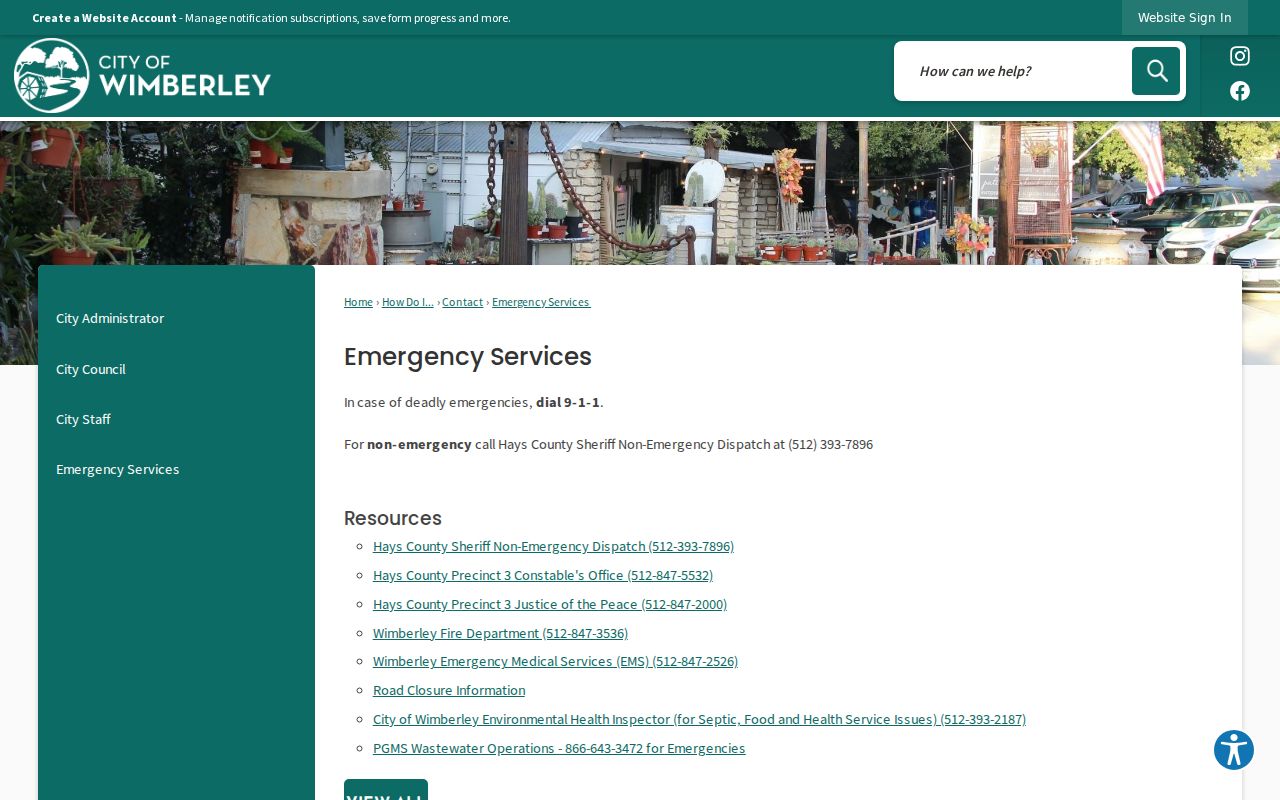
Dripping Springs has no separate city police department in the researched contact information; the Hays County Sheriff's Office handles local law-enforcement calls. Wimberley likewise directs police response to county agencies. These service arrangements do not merge the city court's docket with a justice-court or county docket.
Inside a Municipal Court Warrant
A result may show case identifiers and event history, but a city portal may not display a complete warrant status. Treat the case number, court, charge, setting history, balance, and status as separate fields. Call the issuing clerk to verify whether a warrant remains active and what event will clear it.
| Warrant / Cause Number | Use the number to distinguish similar names and link clerk questions to the correct case. |
|---|---|
| Charge / Offense | Read the exact citation or ordinance description and whether the entry concerns failure to appear or a fine order. |
| Issuing Court | Confirm the specific city or JP court; each office controls its own docket. |
| Bond / Fine Amount | Ask the clerk for the current total, fees, and accepted resolution choices. |
| Status | Ask whether active, recalled, cleared, or awaiting a new court event; do not infer status from a paid receipt alone. |
Hays County Wimberley Municipal Warrant Records Are Not a Portal
Wimberley's City Hall and JustFOIA service provide routes to request city-held records. The city describes its archive as agendas, minutes, ordinances, and resolutions; it does not publish a current city warrant-search portal in the researched materials. The archive should not be treated as a warrant list, and an old council minute mentioning law enforcement does not establish a present warrant status.
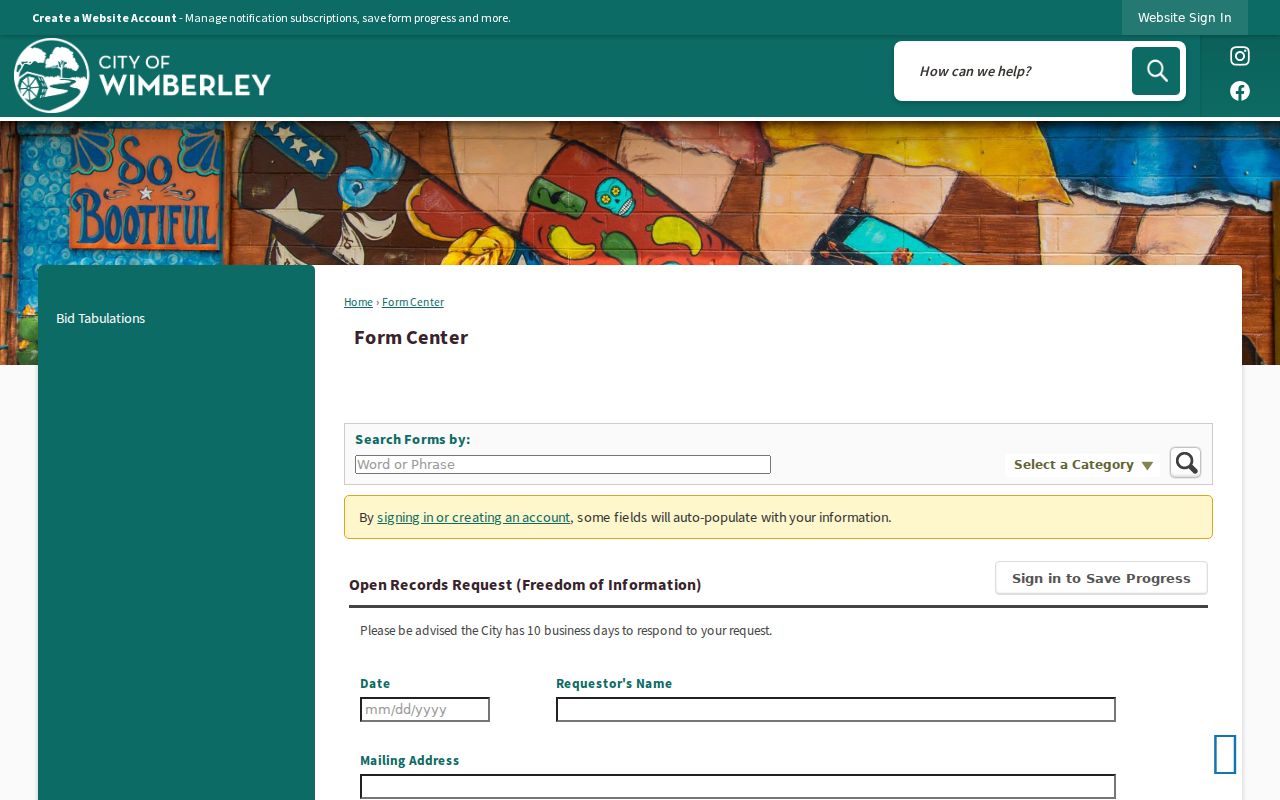
A written request can specify the subject, details, preferred format, and contact information. The city indicates that requests may take up to ten business days, and unusual costs or legal review can affect timing. For a case status, contact the agency or court that actually maintains the record rather than waiting on a broad archive request.
How to Resolve a Municipal Court Warrant
Resolution depends on the court and the reason the warrant issued. Ask whether the court will accept payment, a new appearance date, a bond, or another option, and whether counsel should arrange the next step. Keep any receipt or signed order and confirm the docket changed; a payment vendor confirmation alone may not show that every hold has cleared.
- Confirm the issuing court, active status, current balance, and the event required to address the warrant.
- Choose only an option the clerk confirms for that case, such as a new appearance, payment arrangement, or counsel-assisted surrender.
- Attend the setting or complete the approved action and retain the filed receipt or order.
- Follow up with the court and, if a county hold is involved, the responsible county office.
Warning: A missed setting can create additional consequences; confirm the case with its court before assuming payment or an online entry has recalled the warrant.
Hays County Municipal Warrants Have a Separate Check Route
A city municipal docket is separate from Hays County sheriff and county-court records. The County FAQ says the Sheriff's Office does not confirm new-charge warrants through ordinary phone or email inquiries and describes a letterhead request through an attorney or bondsman. For an existing municipal citation, contact that city's court; for a county matter, read the official Hays County warrant FAQ.
Do not assume a city response answers a county inquiry or vice versa. The issuing office controls its own case record.