Hays County Arrest Warrants Explained
An arrest warrant is a judge's order authorizing police to take someone into custody. Texas Code of Criminal Procedure Chapter 15 sets the requirements. A magistrate reviews a sworn complaint for probable cause before issuing one. The signed document and the court file control. A public case listing alone will not explain each step. In Hays County, felony matters run through District Court. County Courts at Law handle Class A and B misdemeanors, while JP and municipal courts keep their own limited dockets, so the court level decides where records and questions belong.
Hays County New-Charge Warrant Rule
Hays County draws a firm line around new charges. The county's FAQ says the Warrants Unit will not give out new-charge warrant information by phone or email, and for that question it wants an attorney or bail bondsman on official letterhead to contact the Sheriff's Office. Existing charges go through the Public Records Search instead. That limit trips people up. A blank search result or a quiet phone line is not a court answer about a Hays County warrant. Check the official Hays FAQ for the current route, since the Sheriff's Office page also posts its agency contact and linked service pages.
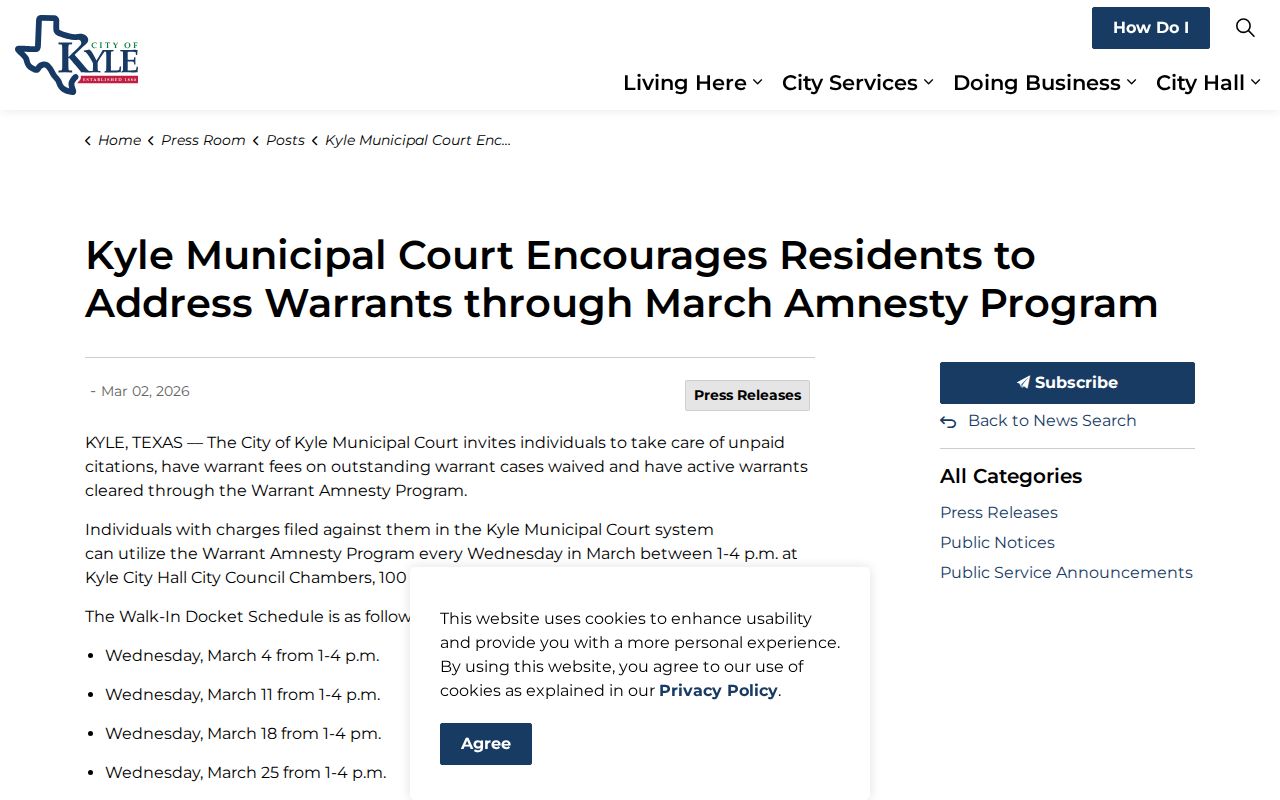
The image is a dated Kyle city program, not a countywide surrender promise.
Inside a Hays County Arrest Warrant
There is no single public Hays County arrest-warrant layout or number pattern. A case search may show charge details and settings. It may not show every process document or status field. Treat any list of warrant fields as questions for the issuing court, not a promise of what each screen displays.
| Process number | Format not documented; a District Clerk cause number identifies the case, not necessarily the warrant. |
|---|---|
| Named party / case | Use the case context and issuing court to distinguish similar names. |
| Charge category | May be summarized in a case record; the warrant document carries its own terms. |
| Issuing court / magistrate | Confirm with the court managing the criminal matter. |
| Bond / bail | Hays bond records are a separate Public Access category. |
| Issue / service date | Not all dates appear in the same public interface. |
Issuance and Public Access in Texas
In Hays County as elsewhere, a complaint or affidavit usually starts the process. The magistrate's review follows the case's rules. A clerk's entry, a service assignment, and a public display can land at different points, so a signed warrant does not post instantly online. Arrest and search warrants differ. Chapter 15 governs arrest warrants. Chapter 18 covers search warrants. Those authorize a search for evidence, not an arrest of a person. Access can also turn on execution, sealing, confidentiality, and investigative limits. Read Chapter 15 and the separate Chapter 18 search-warrant provisions for the statutory text.
Serving Arrest Warrants in Hays County
Hays County deputies and constables can both serve arrest warrants under state law. San Marcos City Marshals back up municipal court process. Kyle and Buda run their own police departments. Dripping Springs and Wimberley use Sheriff's coverage, per the county FAQ. Service and public posting are two different things. A court may enter process before any officer serves it, and an online case screen may lag behind the file. For someone in custody, Hays County Corrections is the route for jail and bond information, though the county cannot promise a release time.
How Hays County Officers Serve Warrants
Hays County treats constables and deputies as peace officers and court officers alike. They can serve arrest warrants anywhere in Texas. That authority stays subject to law and procedure. It does not make a constable office a public warrant status index. For custody questions, the Corrections Bureau posts jail-record and bond contacts, and Hays County says bond releases are processed 24 hours a day without promising a specific release time. Confirm any additional hold with the jail or counsel. See the Hays County constable information and the Corrections Bureau page for their separate roles.
Comparing Arrest, Summons, and Bench Warrants
A summons asks you to appear or respond. An arrest warrant lets police take a person into custody. A bench warrant usually follows a missed court obligation. The issuing court and Texas law define the process in Hays County, so the exact terms matter more than a broad label in a search result.
| Feature | Arrest Warrant | Summons | Bench Warrant |
|---|---|---|---|
| Purpose | Authorizes arrest under its terms | Directs a person to appear or respond | Addresses missed court process or order |
| Basis | Case-specific warrant standard | Notice and appearance procedure | Failure to appear or comply, depending on court |
| Issuer | Judge or magistrate | Court or authorized process | Judge managing the case |
| Next step | Ask counsel and court about status | Follow the date and instructions | Ask issuing court about appearance or recall |
Hays County Warrant Records and Federal Venue
Hays County and federal court are different systems. Hays County sits in the Western District of Texas, Austin Division. The county clerk and the Sheriff's Office cannot certify federal status. PACER is a docket system. It is not a guaranteed open warrant roster. Check the Western District of Texas venue information to confirm your division. Then contact the federal Clerk or counsel. Don't send a federal question to the Hays Warrants Unit.
If There's an Arrest Warrant for You
Ask the issuing court or an attorney to identify the formal process and what to do next. Counsel may suggest options. Depending on the case, those include a voluntary appearance, bond, or a motion to recall or quash. Hays County publishes no universal public recall form. For someone already in custody, the Corrections Bureau handles jail and bond routing. Keep every paper. That means the citation, case number, signed orders, and bond paperwork. A receipt or a case entry alone does not show that every hold or court obligation has ended, and the Hays County resolution steps on the home page explain the county-wide route.
Important: Contact an attorney and the issuing court before appearing or paying. Ask which action changes the court record and whether separate holds remain.
City Court Warrants Stay Separate From Felony Process
Hays County's cities each run their own municipal court for Class C citations and other local matters. Those cases stay separate from felony work. A city judge's warrant is not a district-court arrest warrant. Nor is it a county sheriff matter. Call the city clerk if a municipal warrant name comes up. That office can pull its own case and tell you whether an appearance or a payment option clears the city court entry. Buda's court page lays out the local scope and how to reach it, and its payment page lists that court's methods and fees. Those figures bind only Buda's municipal court, not bond or warrant terms anywhere else in Hays County.
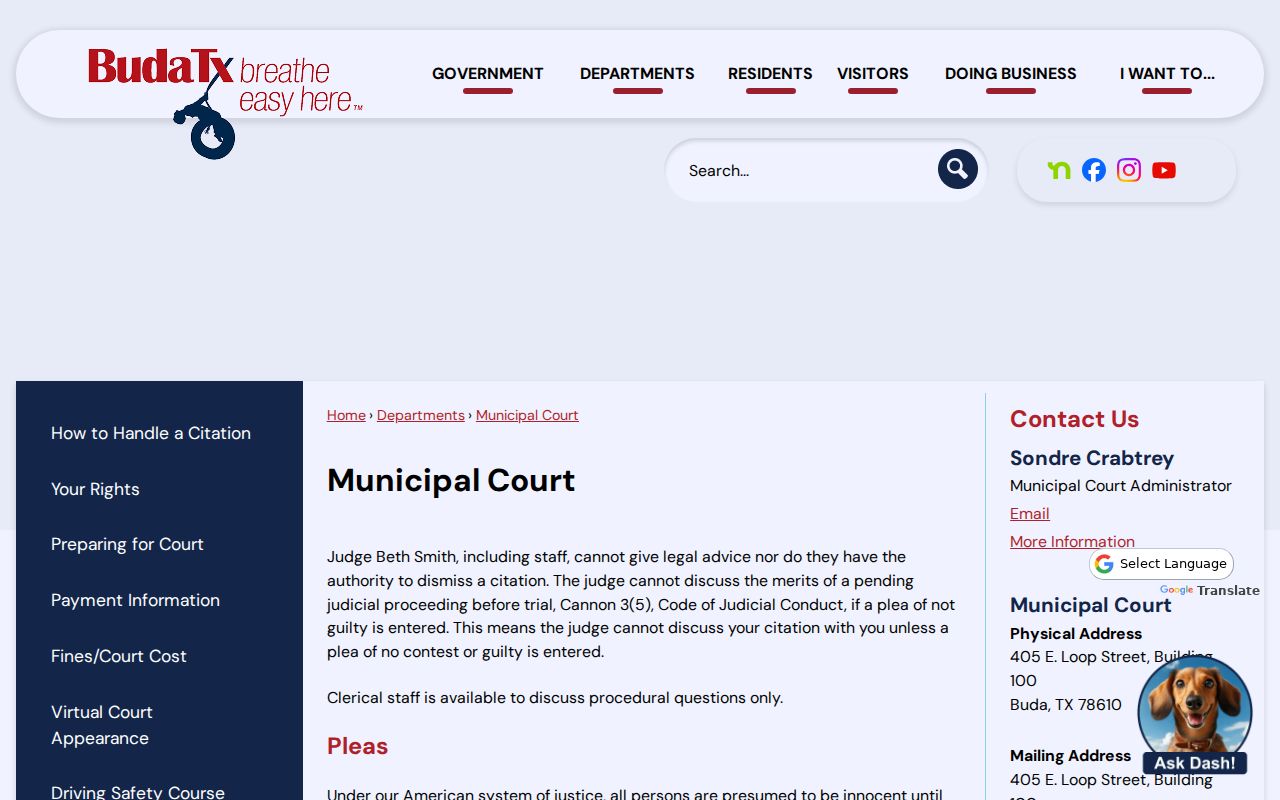
Read a city's own terms before you pay. Buda warns that paying online can carry a plea or a finding, while Kyle and San Marcos set their own procedures for Hays County drivers.